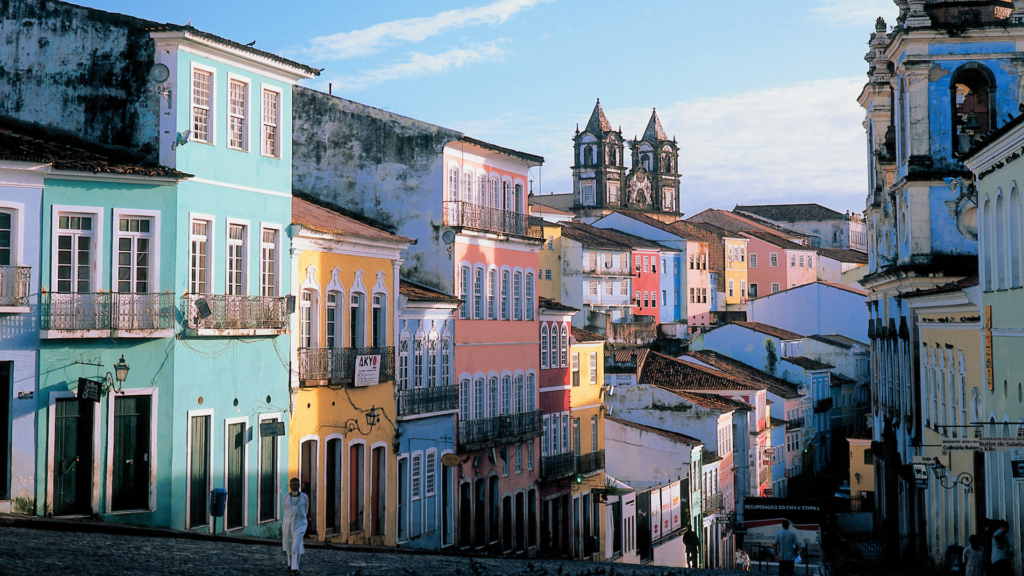
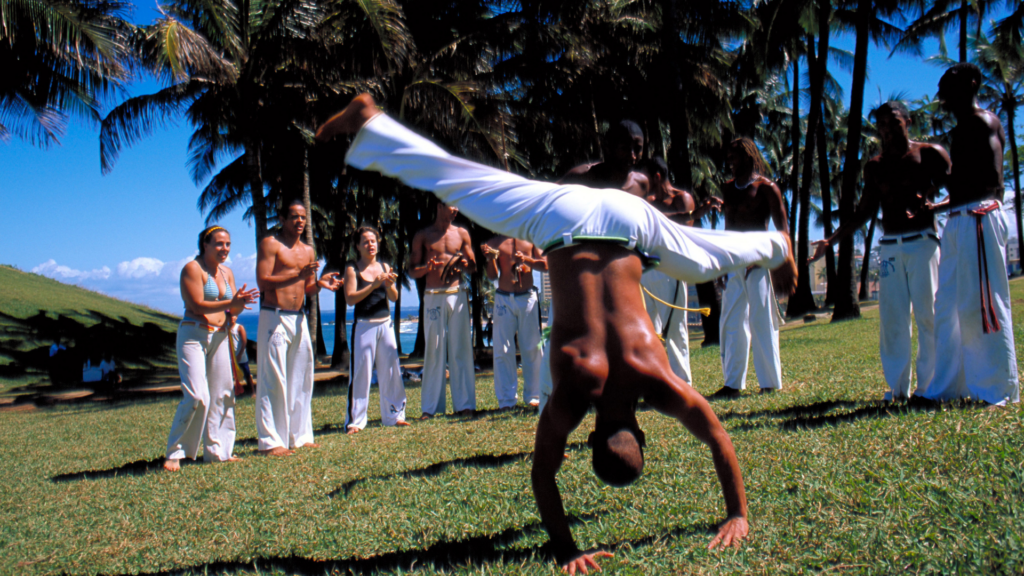
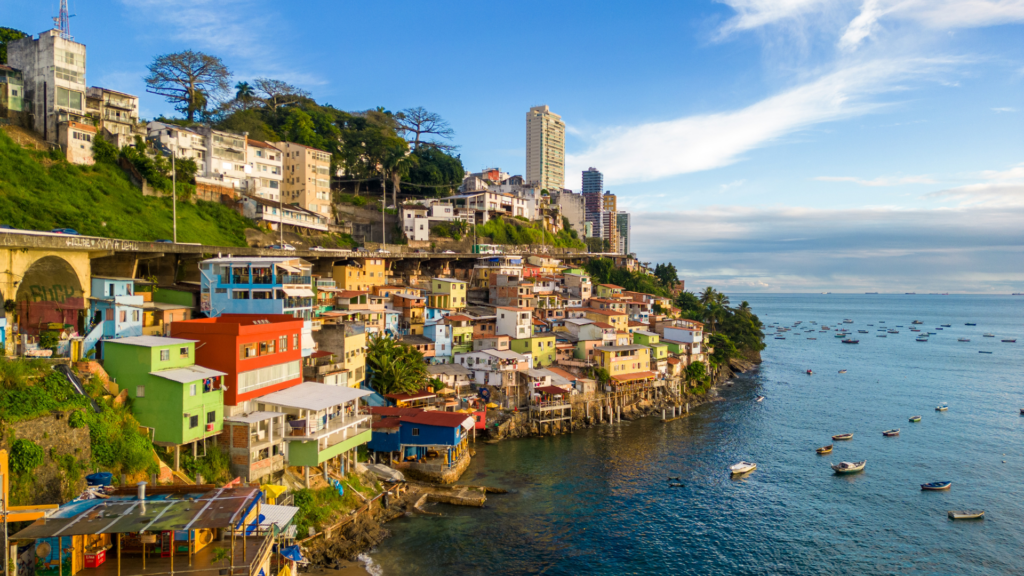
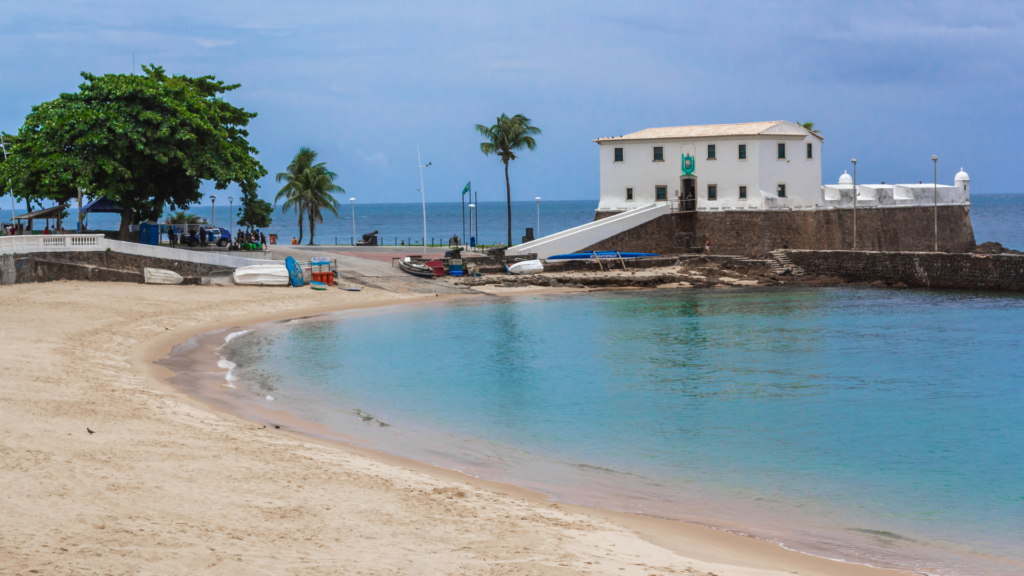
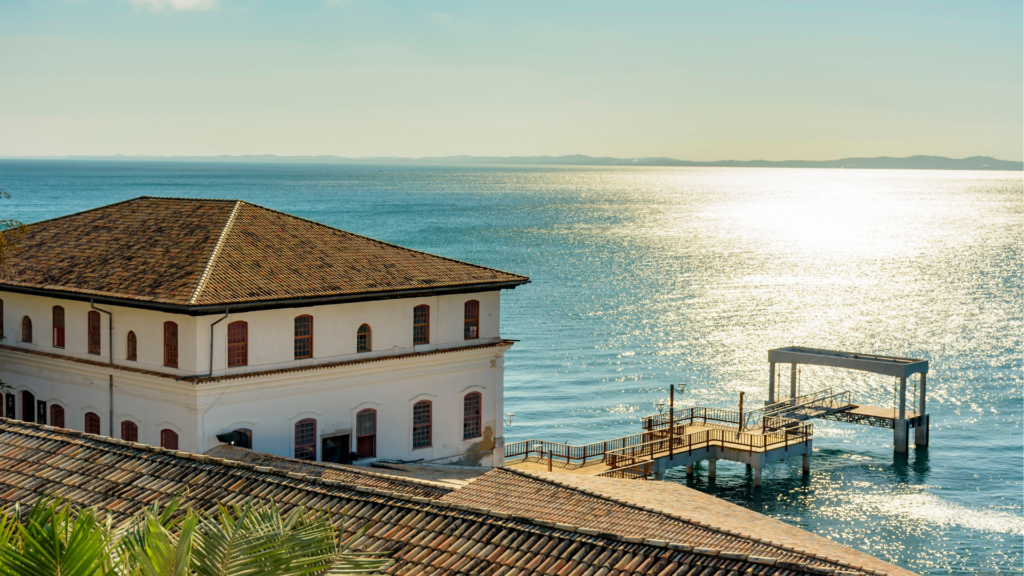


Few cities reveal themselves as vividly as Salvador, whose historic centre has been recognised by UNESCO since 1985. Brazil’s first capital is a place of colour, music and deep cultural identity. This city is also where African, Indigenous and Portuguese influences have shaped everything from the architecture and religion to the food and rhythms of daily life.
Day One: History, Heritage and Sunset Views
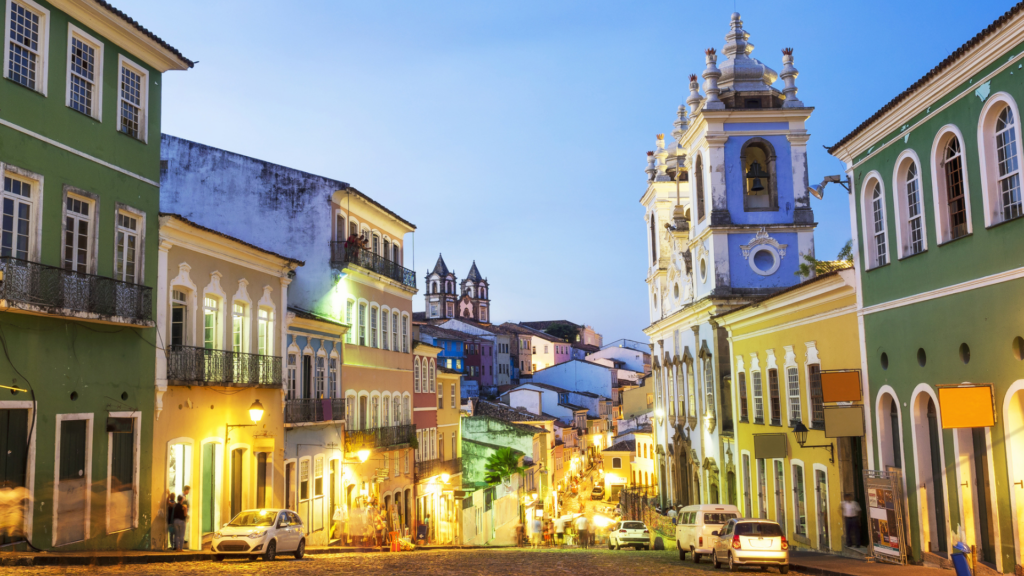
Travellers should begin in the Pelourinho, the heart of Salvador’s UNESCO-listed historic centre. Wandering through its cobbled streets, past colourful colonial houses and impressive churches, clients can stop at the Casa do Carnaval da Bahia and the Jorge Amado Foundation to understand the stories, music and personalities behind the city.
Lunch should be an introduction to Bahian cuisine. Preta, at Palacete Tirachapéu, is a stylish choice in the historic centre, while Dona Mariquita and Casa de Tereza are excellent places to discover regional flavours.
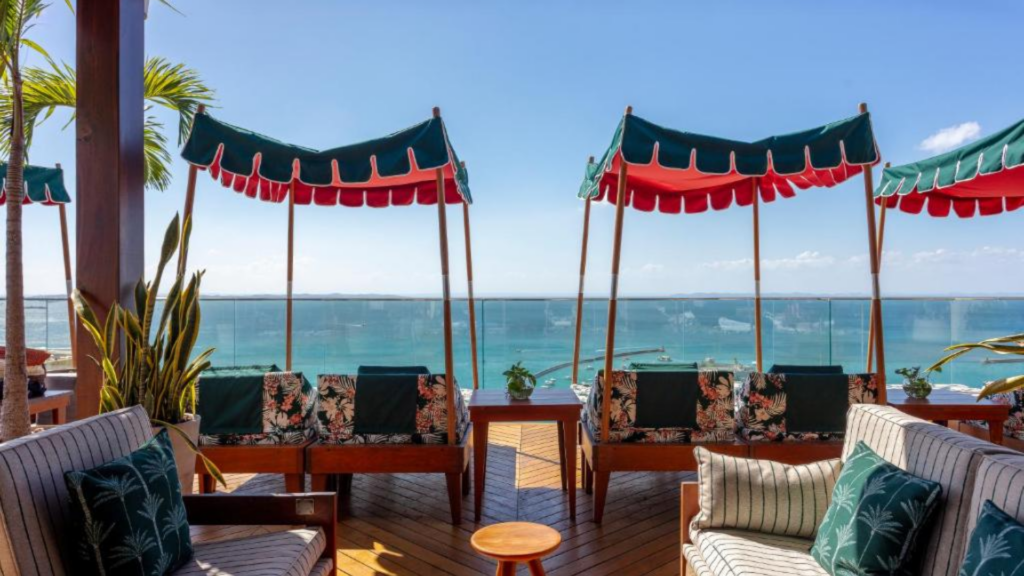
The late afternoon can be spent exploring Santo Antônio Além do Carmo, a charming neighbourhood of historic houses, galleries, cafés and small bars. Travellers can end the day with sunset drinks at Peixe Voador or Ori Rooftop, both offering beautiful views over the city and bay.
Day Two: The Bay, the Beach and Rio Vermelho
Morning starts on the water with a canoe experience across All Saints Bay, offering a completely different perspective of Salvador and its coastline.
Later, we recommend heading to Porto da Barra, one of the city’s most popular urban beaches, for a swim and a relaxed afternoon. Those wanting a fuller beach experience can continue towards Stella Maris or Flamengo and spend time at Lôro, one of Salvador’s best-known beach clubs.
In the evening, Rio Vermelho is definitely worth exploring, the city’s traditional bohemian neighbourhood. This is the place to taste freshly prepared acarajé, one of Bahia’s most iconic dishes, before enjoying dinner, live music or cocktails. For something special, clients can book drinks at Purgatório, known for its creative cocktail menu and speakeasy atmosphere.
Day Three: Contemporary Salvador
The final day can be dedicated to Salvador’s more contemporary side. Travellers can visit the Museum of Contemporary Art of Bahia, followed by lunch at Preta Bistrô, located within its courtyard.
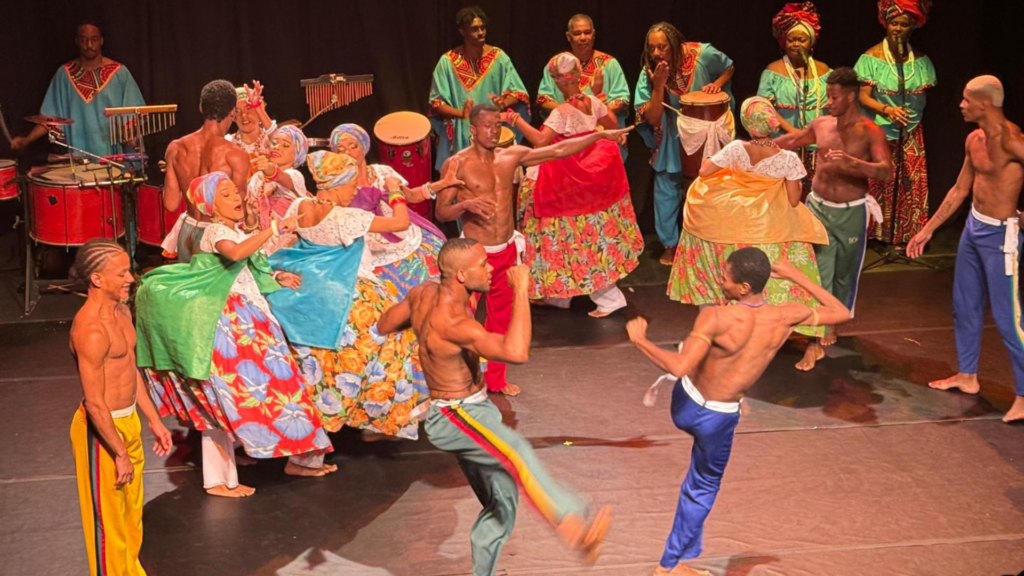
Continuing along Rua Chile and the revitalised historic centre, your clients might stop at Silva or the intimate Cazinha Bistrô. For a final cultural highlight, attending a performance by the Balé Folclórico da Bahia offers energetic shows that bring together dance, percussion and Afro-Brazilian traditions.
Where to Stay
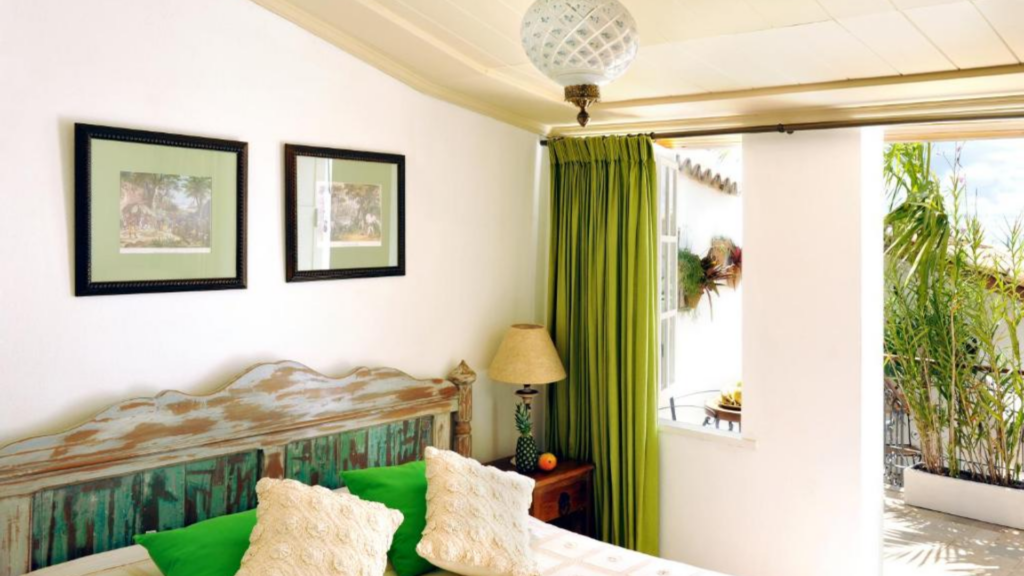
For atmosphere and intimacy, Villa Bahia in the Pelourinho is a top recommendation. Fera Palace combines historic character with contemporary style and a rooftop pool, while Fasano Salvador offers clients a sophisticated luxury stay overlooking All Saints Bay.
If you are interested in hearing more about Salvador or any experiences with Be Brazil, please contact millie@americas.co.uk